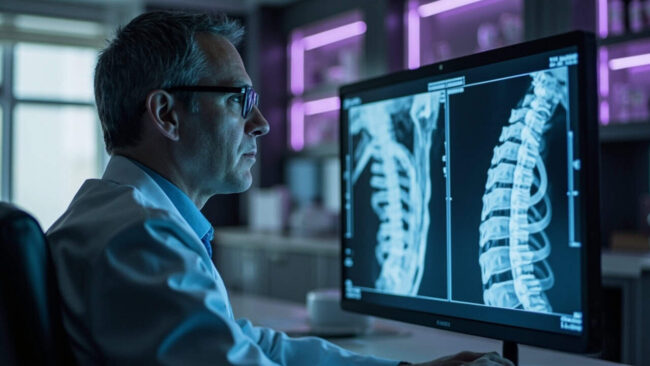
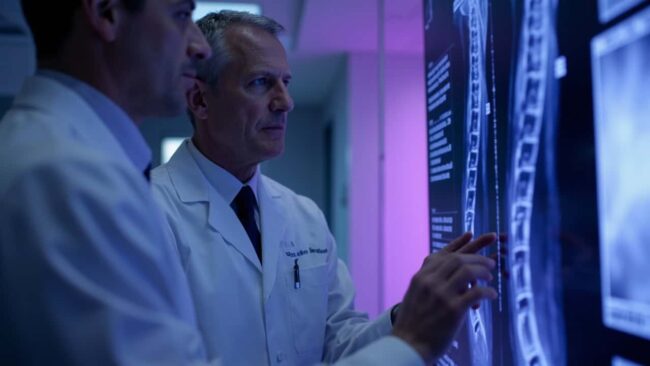
Dr. Wiederholz is a leading expert in the field of minimally invasive spine treatments in Houston. Trained directly under Dr. Kevin Pauza, the inventor of the Discseel® Procedure, Dr. Wiederholz has been performing this innovative treatment since 2020, making him the first physician in Houston to do so. His direct training under Dr. Pauza has provided him with a deep understanding and mastery of the Discseel® Procedure, allowing him to offer his patients a safe and effective alternative to surgery for chronic back and neck pain. As a trailblazer in his field, Dr. Wiederholz is dedicated to providing his patients with the highest standard of care. His expertise and commitment to patient wellbeing have established him as the trusted choice for those seeking to avoid surgery and improve their quality of life. Choose Dr. Wiederholz, the Houston Discseel® Expert, for a successful return to a pain-free life..
Annular tears in spinal discs face significant healing challenges due to limited blood supply to the outer disc layer. While acute inflammation may decrease within weeks, the structural defect often persists, explaining why many patients experience recurring pain episodes even after conservative treatment. Understanding these biological limitations helps patients make informed decisions about their care timeline and treatment options.
Recovery from back surgery varies widely based on procedure type and individual factors. Microdiscectomy patients often resume light activities within 2-6 weeks, while spinal fusion may require 3-6 months for basic function and up to a year for full recovery. However, research shows not all patients achieve complete healing, with factors like preoperative symptom duration, adjacent segment degeneration, and underlying disc pathology influencing long-term outcomes.
Back pain can originate from spinal discs or facet joints, each creating distinct pain patterns through different biological mechanisms. Disc problems involve tears in the outer disc wall that allow nerve fibers to grow inward, while spinal arthritis affects the small joints between vertebrae through cartilage breakdown. Accurate diagnosis through imaging and clinical examination determines the most appropriate treatment approach for your specific condition.
Running with a herniated disc requires careful evaluation of your specific disc pathology. Small bulges without nerve compression may tolerate modified activity under physician guidance, while large extrusions or unstable annular tears carry higher risk. Understanding the biomechanical forces on your spine and recognizing warning signs helps determine when running is safe versus when it threatens permanent nerve damage.
Degenerative disc disease involves progressive structural breakdown of spinal discs, leading to reduced height and shock absorption. Walking promotes circulation and strengthens spinal support muscles through low-impact movement, but does not reverse disc degeneration or repair annular tears. Persistent pain despite consistent walking may indicate underlying disc pathology requiring medical evaluation beyond conservative movement strategies.
Inversion tables use gravity-assisted traction to temporarily decompress the spine and may reduce pressure on herniated discs. While some patients report short-term relief, inversion therapy cannot repair damaged disc tissue or seal annular tears. Understanding what inversion can and cannot accomplish helps patients make informed decisions about conservative care and when to seek physician evaluation for persistent discogenic pain.
Pregnancy creates significant spinal adaptations through weight gain, postural shifts, and hormonal changes. While most pregnant women experience back pain, systematic reviews confirm pregnancy does not directly cause disc herniation. True disc herniation remains rare during pregnancy, and most symptoms resolve naturally after delivery as biomechanical stressors normalize.
Home spinal decompression techniques like inversion tables and specific stretches can temporarily reduce mechanical pressure on discs and nerves. While these methods may provide short-term relief by creating space between vertebrae, they cannot seal annular tears in damaged discs or address inflammatory chemicals that often drive chronic pain. Understanding these limitations helps determine when conservative approaches require physician evaluation.
An L4-5 herniated disc occurs when the cushion between the fourth and fifth lumbar vertebrae ruptures, potentially pressing on nearby nerves. Conservative treatments like physical therapy and anti-inflammatory medications resolve symptoms in approximately 60-70% of patients within weeks. However, persistent symptoms may indicate the disc tear itself needs repair rather than symptom management alone. Understanding the difference between these approaches helps patients make informed treatment decisions.
Spinal decompression techniques aim to reduce disc pressure and relieve nerve compression through motorized traction or percutaneous procedures. While many patients experience initial improvement, the durability of relief depends heavily on whether underlying annular tears can heal. Understanding the difference between temporary symptom management and structural disc repair helps patients make informed decisions about their spine care.