
By Matthias Wiederholz, MD
Quadruple Board-Certified in Physical Medicine & Rehabilitation, Sports Medicine, Pain Medicine, and Anti-Aging, Regenerative & Functional Medicine
Introduction
As an interventional spine specialist with nearly two decades of clinical experience, I’ve helped Houston patients understand what “natural healing” really means for disc injuries. Patients frequently ask how to heal a bulging disc naturally, hoping their body can repair itself without surgery or invasive procedures. That’s completely understandable.
However, the science tells a more nuanced story. Research shows that only 13% of bulging discs demonstrate spontaneous regression, compared to 96% for sequestrated herniations. This dramatic difference exists because disc tissue lacks a direct blood supply, which severely limits natural healing capacity.
Conservative treatments like rest, physical therapy, and anti-inflammatory medications can reduce pain and improve function. But these approaches manage symptoms rather than repair damaged annular fibers. Understanding this distinction helps you make informed decisions about your care. To learn more about the physician expertise available, see my bio and experience at Performance Pain and Sports Medicine.
Persistent back pain lasting several weeks despite conservative management may warrant further evaluation to identify underlying causes, including potential structural disc issues. Whether you’re in The Heights or Oak Forest, finding a spine specialist who can accurately diagnose the source of persistent pain becomes essential.
Explore treatment options for back pain to better understand the full spectrum of care available in Houston.

What Does ‘Natural Healing’ Really Mean for a Bulging Disc?
When patients ask me about how to heal a bulging disc naturally, they’re usually hoping their body can repair damaged disc tissue without medical intervention. I understand that hope completely. However, we need to clarify what “healing” actually means at the cellular level.
True disc healing requires regenerating damaged annular fibers and restoring disc structure. Research on disc biology shows this process faces significant obstacles. Disc tissue lacks a direct blood supply, which severely limits nutrient delivery and waste removal. Without adequate blood flow, damaged cells cannot efficiently repair themselves.
In my Houston practice, I distinguish between symptom improvement and structural repair. Many treatments can reduce pain and inflammation. Far fewer can actually restore damaged disc tissue. This distinction matters because it helps you understand what different treatment approaches can realistically accomplish.
Natural healing typically refers to your body’s innate repair mechanisms working without surgical intervention. For disc tissue, these mechanisms are limited by biology, not by lack of effort on your part. Learn more about disc desiccation’s causes and limitations for healing to deepen your understanding of disc health.
Can Bulging Discs Actually Heal on Their Own? What Houston Patients Should Know
The answer depends entirely on what type of disc problem you have. Not all disc injuries behave the same way.
Clinical studies tracking disc changes over time reveal important patterns. Sequestrated disc fragments—pieces that completely separate from the main disc—show regression rates up to 96%. These fragments can shrink through inflammatory resorption. Your immune system recognizes the separated tissue and gradually breaks it down.
Bulging discs behave very differently. Only 13% demonstrate any spontaneous regression. The difference relates to blood supply and immune system access. Sequestrated fragments develop new blood vessels that bring immune cells. Bulging discs remain isolated from this process.
Macrophages play a key role in the resorption of herniated disc fragments by phagocytosing the extruded material and secreting enzymes that degrade disc components. Research on disc resorption mechanisms confirms that this neovascularization and inflammatory response drives regression in larger herniations. However, this same process doesn’t occur with intact bulging discs.
When I evaluate Houston-area patients with persistent symptoms, I often find the disc bulge hasn’t changed despite months of conservative care. The underlying annular tear remains unhealed. This explains why symptoms continue even when inflammation decreases. For more on structural disc issues, review comprehensive guides to L5-S1 bulging disc and different disc pathologies.

Why Conservative Treatments Help Symptoms But May Not Repair Discs
Conservative care plays an important role in managing disc-related pain. Physical therapy, anti-inflammatory medications, and activity modification can significantly reduce symptoms. However, these approaches work primarily by managing inflammation and strengthening supporting muscles.
Evidence-based guidelines from spine specialists recommend conservative care as the appropriate first step for most disc herniations. This approach makes sense because many patients improve with time and supportive treatment.
The limitation becomes clear when we examine what happens at the disc level. Physical therapy may help strengthen muscles that support the spine. Anti-inflammatory medications may help reduce chemical irritation of nearby nerves. Neither approach is known to repair torn annular fibers or fully restore disc integrity.
In my practice, I see patients who’ve completed months of physical therapy with partial improvement. Their pain decreases but never fully resolves. When I perform diagnostic imaging, the annular tear remains visible. The disc continues leaking inflammatory proteins that irritate nerve roots.
Conservative care succeeds when inflammation is the primary problem. It falls short when structural disc damage drives ongoing symptoms. Understanding this difference helps explain why some patients plateau despite excellent compliance with therapy. For those seeking exercises for disc health, discover which herniated disc exercises are most helpful.
The Biological Limits of Disc Self-Repair
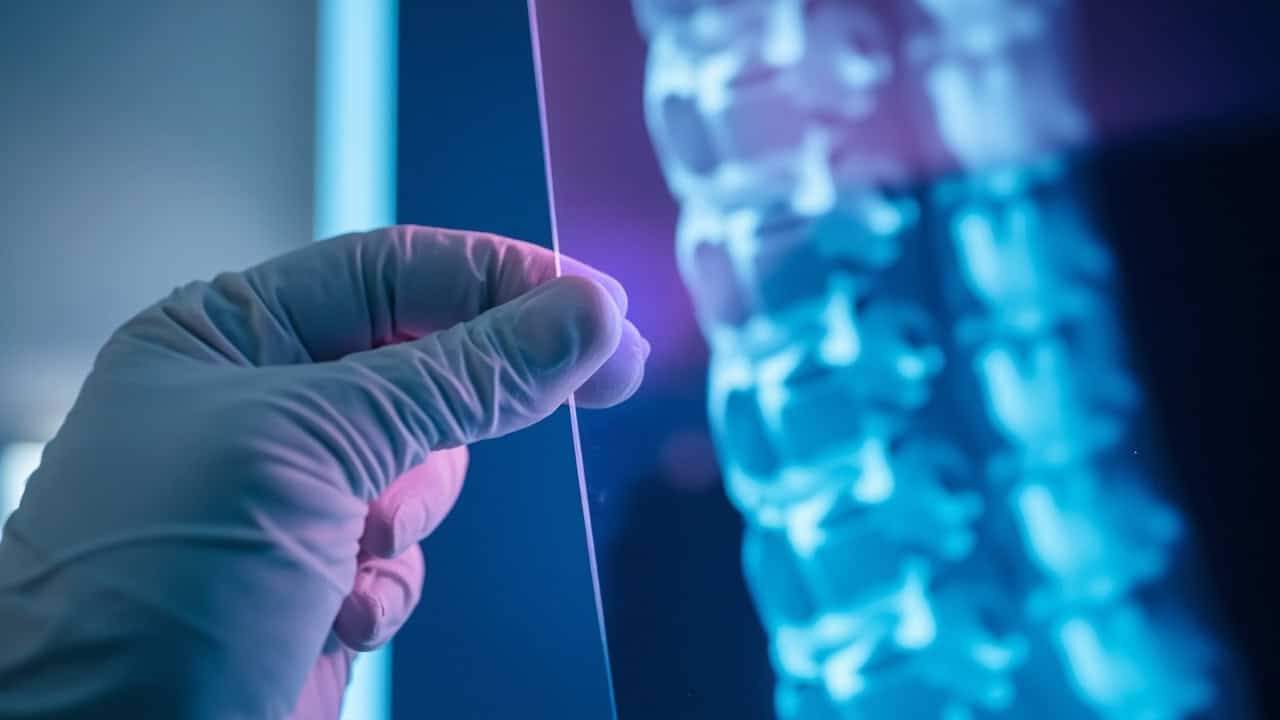
Disc tissue faces unique challenges that limit natural healing capacity. The avascular nature of discs—meaning they lack a direct blood supply—creates a hostile environment for repair.
Healthy discs, being avascular, may receive nutrients through diffusion from surrounding tissues. This process works adequately for normal maintenance. However, damaged discs require significantly more resources to heal. The nutrient supply to avascular discs through diffusion may be limited, potentially affecting the tissue’s repair capacity.
Systematic reviews of regenerative treatments consistently highlight this fundamental limitation. Even advanced biologic therapies struggle to overcome the disc’s poor healing environment.
Annular tears present an additional problem. Once the tough outer layer of the disc tears, it may rarely heal completely. The tear allows nucleus pulposus material to leak out. This leakage triggers ongoing inflammation even after initial injury symptoms improve.
I explain to patients that disc healing differs fundamentally from bone or muscle healing. Bones typically have an excellent blood supply and heal predictably. Muscles often regenerate efficiently after injury. Discs lack these advantages. Their isolated location and limited blood flow create barriers that conservative care cannot overcome.
Learn more about the guide to spinal disc tears—causes, symptoms, and treatment options for a better grasp on disc injuries and their healing limits.
When Natural Healing Isn’t Enough: What Houston Spine Specialists See
Persistent pain beyond 12 weeks despite appropriate conservative care suggests underlying structural problems that haven’t resolved. This timeline matters because most inflammation-driven pain improves within this period.
When symptoms continue, I focus on identifying the true pain generator. Advanced imaging combined with diagnostic procedures helps determine whether the disc itself remains the primary source. Many Houston patients I evaluate have tried multiple conservative approaches without lasting relief.
Evidence on regenerative medicine approaches shows that targeted interventions may help when conservative care hasn’t addressed underlying disc pathology. These approaches aim to repair structural damage rather than simply managing symptoms.
For patients with confirmed annular tears and discogenic pain, mechanism-based treatments that directly address the structural defect may provide relief that conservative care couldn’t achieve. The Discseel® Procedure represents one such approach. It uses a biologic fibrin sealant to seal annular tears and stop ongoing disc leakage. For more detailed patient feedback and results with this approach, read Discseel® reviews and lasting back pain relief testimonials.
This procedure differs from conservative care because it targets the structural problem directly. The fibrin sealant mechanically closes the tear and supports collagen-based repair within the disc. Clinical outcome data show statistically significant improvements in pain and function through 12 months post-treatment in published patient cohorts.
Not every patient requires this level of intervention. However, when conservative care has been appropriately tried without adequate relief, and diagnostic evaluation confirms annular pathology, targeted repair procedures offer an evidence-supported option. The key is accurate diagnosis and understanding which patients have structural damage that won’t resolve with time and conservative management alone.
For those seeking local advanced disc treatment, visit our Houston clinic location for expert care options.

One Patient’s Experience
I’ve worked with many patients who tried natural approaches first, hoping their disc would heal with time and conservative care. That’s exactly the right place to start.
If you ever need a doctor that is best in pain management. Hands down and highly recommend Dr. Matthias Wiederholz. I saw him back in 2021 for back pain, we tried the steroid shots about 2x but the pain relief is temporary, I am looking for more a long term results. He recommended PRP treatment and been pain free for about 18 months but he did informed me that it is possible that I will need another treatment if I’m starting having pain…
This is one patient’s experience; individual results may vary.
Ann’s experience illustrates an important principle in spine care. Conservative approaches like steroid injections can provide temporary relief by reducing inflammation. When symptoms return, it often signals that underlying structural damage needs a different approach. Accurate diagnosis helps determine which patients benefit from regenerative treatments that address the root cause rather than managing symptoms alone.
You can get further insights by reviewing discussions on effective treatment options for L5-S1 disc herniation pain.
Conclusion
How to heal a bulging disc naturally depends on understanding what your body can realistically accomplish without intervention. Research shows that only 13% of bulging discs demonstrate spontaneous regression, and disc tissue lacks the blood supply needed for robust self-repair. Conservative treatments like physical therapy and anti-inflammatory medications can reduce pain and improve function by managing inflammation and strengthening supporting muscles. However, these approaches don’t repair damaged annular fibers or restore disc integrity.
When symptoms persist beyond 12 weeks despite appropriate conservative care, it often indicates structural disc damage that hasn’t resolved. Accurate diagnosis is essential to identify the true pain generator for patients with persistent disc-related symptoms. For patients with confirmed annular tears and discogenic pain, evidence on regenerative approaches shows that targeted interventions may help when conservative care hasn’t addressed underlying disc pathology. The Discseel® Procedure represents one such option, using a biologic fibrin sealant to seal annular tears and support collagen-based repair within the disc.
If you’ve tried conservative care without adequate relief, I encourage you to see if you may be a candidate for the Discseel® Procedure. If you’re ready to take the next step, contact us for an appointment or evaluation. Accurate diagnosis and understanding of your specific disc pathology help determine the most appropriate treatment path for your situation.
This article is for educational purposes only and should not be used as a substitute for professional medical advice, diagnosis, or treatment. Always seek the advice of your physician or other qualified healthcare provider with any questions you may have regarding a medical condition or treatment options. Never disregard professional medical advice or delay in seeking it because of something you have read in this article.
Frequently Asked Questions
Can a bulging disc heal completely on its own?
Bulging discs rarely heal completely without intervention. Only 13% show any spontaneous regression, compared to 96% for sequestrated herniations. This difference exists because disc tissue lacks a direct blood supply, which severely limits natural repair capacity. While inflammation may decrease over time, damaged annular fibers typically remain unhealed.
Conservative care can reduce symptoms by managing inflammation and strengthening supporting muscles, but it doesn’t restore disc structure. Persistent pain beyond several weeks despite appropriate conservative management may suggest underlying structural disc issues. For additional details, visit our article on herniated disc symptoms, causes, and treatment.
How long should I try conservative treatment before considering other options?
Evidence-based guidelines recommend several weeks of appropriate conservative care as the initial approach for most disc-related pain. This includes activity modification, physical therapy, and anti-inflammatory medications. If symptoms persist or worsen despite consistent conservative management, it may indicate structural disc damage that won’t resolve with time alone. Diagnostic evaluation can determine whether ongoing pain stems from inflammation that needs more time or from annular tears requiring targeted intervention. The key is accurate diagnosis rather than arbitrary timelines.
What makes Discseel® different from physical therapy or injections?
Physical therapy may help strengthen muscles that support the spine and reduce mechanical stress on damaged discs. Steroid injections decrease inflammation around irritated nerves. Both approaches manage symptoms but do not repair torn annular fibers. Discseel® uses a biologic fibrin sealant injected directly into the disc to mechanically seal annular tears and stop ongoing leakage of inflammatory proteins.
This addresses the structural defect rather than managing its consequences. Clinical outcome data show statistically significant improvements in pain and function through 12 months post-treatment in published patient cohorts, though results vary by individual. Find out more about the Discseel® Procedure process here.
Where can I find evidence-based treatment for bulging discs in Houston?
If you’re experiencing persistent disc pain despite conservative care, seeking evaluation from a spine specialist with expertise in regenerative medicine can help determine the underlying cause. At Performance Pain and Sports Medicine, you’ll receive a comprehensive diagnostic evaluation to distinguish between inflammation-driven pain and structural disc damage.
Advanced imaging and diagnostic procedures identify whether annular tears or other disc pathology require targeted intervention. The practice serves Houston and surrounding areas with evidence-based approaches ranging from conservative management to regenerative procedures like Discseel® when appropriate for confirmed disc pathology.