
By the Pain Management Team at Performance Pain and Sports Medicine
Suzanne Manzi, MD · Matthias Wiederholz, MD · Jade Nemeth, PA-C
Updated April 2026
On This Page:
Chronic joint pain and tendon injuries can make everyday activities feel difficult. When rest, physical therapy, and medications stop providing relief, PRP injections in Houston offer a non-surgical option that uses the body’s own healing process. Platelet-rich plasma therapy concentrates growth factors from a patient’s blood and delivers them to damaged tissue, where they may help reduce pain and support repair (Everts et al., Int J Mol Sci, 2020).
At Performance Pain and Sports Medicine, quadruple board-certified physicians specialize in regenerative medicine and interventional pain management. The practice offers platelet-rich plasma in Houston as part of a comprehensive approach to treating joint, tendon, and musculoskeletal conditions.
What Is Platelet-Rich Plasma (PRP) Therapy?
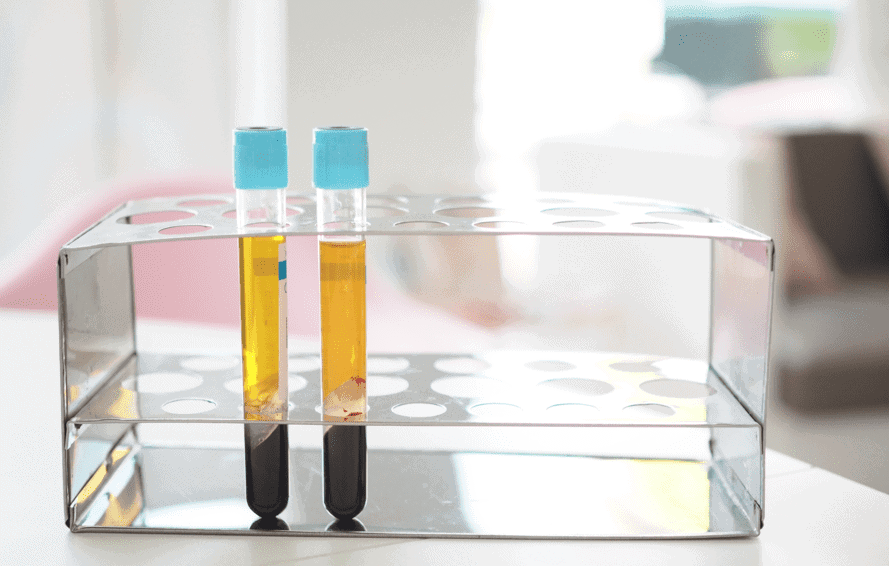
PRP therapy is an injectable treatment made from a patient’s own blood. A small blood sample is processed in a centrifuge to separate and concentrate the platelets, which contain growth factors at levels 5 to 10 times higher than normal blood (AAOS OrthoInfo). These growth factors, including PDGF, TGF-beta, and VEGF, support the body’s natural inflammation and tissue repair processes (Everts et al., Int J Mol Sci, 2020).
Because PRP is autologous (made from the patient’s own blood), there is no risk of allergic reaction or disease transmission. PRP is not stem cell therapy, not a steroid injection, and not a surgical procedure. It is a regenerative injection that works by amplifying the body’s existing healing response.
Who Is a Candidate for PRP Injections?
PRP injections may help patients with a range of musculoskeletal conditions. The strongest clinical evidence supports PRP for mild to moderate knee osteoarthritis, where multiple meta-analyses show clinically meaningful improvement in pain and function (Bensa et al., Am J Sports Med, 2025).
PRP is also used for tendon conditions, including:
- Tennis elbow (lateral epicondylitis)
- Rotator cuff tendinopathy
- Plantar fasciitis
- Sports injuries involving tendons and ligaments
Some patients with spine and back pain may benefit from PRP when used alongside other interventional approaches such as facet joint injections. Performance Pain and Sports Medicine offers PRP as part of an integrated pain plan for select spine and back pain patients when the clinical picture supports it.
Patients with active infections, blood clotting disorders, or certain cancers may not be candidates. A physician evaluation determines whether PRP is appropriate for each patient’s condition.
How PRP Injections Work
The PRP injection process at Performance Pain and Sports Medicine follows four steps:
- Consultation and evaluation. A physician reviews the patient’s condition, imaging, and treatment history to confirm PRP is appropriate.
- Blood draw. A small blood sample is drawn from the patient’s arm, similar to a routine lab draw.
- Centrifuge processing. The sample is placed in a centrifuge for 15 to 20 minutes, separating the platelet-rich layer from the rest of the blood.
- Ultrasound-guided injection. The concentrated PRP is injected into the target joint, tendon, or tissue using real-time ultrasound guidance for precision placement.
The entire visit typically takes 45 to 60 minutes. Ultrasound guidance helps ensure the PRP reaches the exact target area.
Benefits of PRP Therapy
PRP therapy offers several potential benefits for patients managing chronic pain:
- Uses the body’s own healing factors with no synthetic drugs or foreign substances
- Minimal downtime, with most patients resuming normal activities within a few days
- May reduce the need for surgery in some patients with joint or tendon conditions
- Can provide longer-lasting relief than some alternatives, with one meta-analysis showing PRP outperforming hyaluronic acid injections (OR 2.19, P=.002) for knee osteoarthritis outcomes (Oeding et al., Am J Sports Med, 2024)
Results vary depending on the condition being treated, the PRP preparation method, and the platelet concentration used. Not all patients respond the same way, and outcomes are not guaranteed.
Risks and Side Effects
PRP injections are considered safe, with a low risk of serious side effects. Because PRP is made from the patient’s own blood, there is no risk of allergic reaction or transmitted infection (Sheean et al., Arthroscopy, 2021).
The most common side effects are mild and temporary:
- Soreness or swelling at the injection site (typically 1 to 3 days)
- Temporary stiffness in the treated area
- Bruising at the blood draw or injection site
Rare risks include infection or nerve irritation. The treatment team discusses all potential risks before the procedure.
PRP vs Corticosteroids and Other Treatments
Corticosteroid injections often provide faster initial pain relief, sometimes within days. However, evidence suggests that PRP may deliver better results at 3 to 6 months and beyond. For tendinopathy, one meta-analysis of 27 trials found that PRP provided superior mid-term pain relief compared to corticosteroids for tennis elbow, plantar fasciitis, and rotator cuff conditions (Ye et al., BMC Musculoskelet Disord, 2025).
For knee osteoarthritis, PRP also appears to outperform hyaluronic acid at 6 and 12 months (Filardo et al., Cartilage, 2020). Performance Pain and Sports Medicine offers PRP as part of a multimodal treatment plan that may also include epidural steroid injections, radiofrequency ablation, and physical therapy. The right approach depends on the patient’s diagnosis, pain severity, and treatment goals.
Why Choose Performance Pain and Sports Medicine in Houston
Performance Pain and Sports Medicine is led by two quadruple board-certified physicians specializing in interventional pain management and regenerative medicine.
Dr. Suzanne Manzi, MD, quadruple board-certified in Physical Medicine and Rehabilitation, Pain Medicine, Electrodiagnostic Medicine, and Obesity Medicine. Fellowship-trained at Michigan State University in Interventional Spine and Pain Management.
Dr. Matthias Wiederholz, MD, quadruple board-certified in Physical Medicine and Rehabilitation, Pain Medicine, Sports Medicine, and Anti-Aging, Regenerative and Functional Medicine. Founder of the practice since 2009.
Jade Nemeth, PA-C, supports patients through every stage of the treatment process, from initial evaluation through post-procedure follow-up care.
What sets the Houston practice apart:
- Physician-led regenerative medicine care with board-certified specialists
- All PRP injections performed under ultrasound guidance for precision placement
- Dedicated one-on-one consultation time
- Comprehensive evaluation before recommending any procedure
- PRP offered as part of an integrated pain plan that can include spine, joint, and tendon applications
Our Houston Location
The Houston office occupies Suite 1700 of the T-Mobile Tower, providing convenient access from virtually anywhere in the Greater Houston area. The building sits near one of Houston’s most recognizable intersections, where the Southwest Freeway (I-59) meets the West Loop (610). The office serves patients from River Oaks, West University, the Galleria, and the surrounding communities.
Performance Pain and Sports Medicine — Houston:
Address: 4126 Southwest Freeway, Suite 1700, Houston, TX 77027
Landmark: T-Mobile Tower, 17th Floor
Phone: 346-217-1111
Major Cross Streets: I-59 (Southwest Freeway) at 610 (West Loop)
Parking: Covered garage with validation provided
Nearby Neighborhoods: River Oaks, Galleria, Bellaire, West University, Montrose
Visit the Houston location page for directions and office hours, or request an appointment online to learn if PRP therapy may be right for you.
Frequently Asked Questions About PRP Injections
How much does PRP injection cost in Houston?
PRP injections are typically a cash-pay procedure, as most insurance plans currently classify PRP as experimental. Costs can vary depending on the area being treated and the PRP preparation method used. Contact Performance Pain and Sports Medicine at 346-217-1111 for current pricing and payment options tailored to your specific condition.
Are PRP injections covered by insurance?
Most insurance companies currently classify PRP as experimental and do not cover it. The staff at Performance Pain and Sports Medicine can help verify individual coverage and discuss payment options.
How many PRP injections will I need?
Most patients receive one PRP injection, which can be repeated if additional treatment is needed. The decision to repeat depends on the condition being treated, the patient’s response to the initial injection, and the treating physician’s evaluation of ongoing symptoms.
How long do PRP injection results last?
Many patients experience relief lasting 6 to 12 months or longer. For knee osteoarthritis, studies show PRP benefits can persist at 12 months, and some patients maintain improvement beyond that timeframe (Raeissadat et al., BMC Musculoskelet Disord, 2021). Results vary by condition and individual response.
Does PRP really work?
Research shows mixed results depending on PRP preparation, but multiple meta-analyses suggest benefit for knee osteoarthritis when higher platelet concentrations are used (Bensa et al., Am J Sports Med, 2025). One large randomized controlled trial published in JAMA using leukocyte-poor PRP found no significant benefit over placebo (Bennell et al., JAMA, 2021), which highlights that PRP preparation method and platelet concentration matter. The AAOS acknowledges PRP as promising but calls for more research (Brophy & Fillingham, JAAOS, 2022). A physician evaluation can help determine whether PRP is a reasonable option for a specific condition.
How soon can I walk after a PRP injection?
Most patients can walk the same day. Light activity is typically fine within 24 to 48 hours. Physicians generally recommend avoiding strenuous exercise for 1 to 2 weeks to allow the healing process to begin.
What Houston Patients Are Saying
Patients treated at Performance Pain and Sports Medicine in Houston have shared their experiences with Dr. Manzi and Dr. Wiederholz. The reviews below reflect individual patient journeys with regenerative medicine, interventional pain management, and long-term pain care.
“I visit Dr. Manzi for a bilateral L5/S1 herniation, and from the very beginning she offered to treat me with various options. PRP (platelet rich plasma) injections are available to decrease healing time and increase healthy cells…”
— B., Houston
“I have already had one surgery on my knee and am so excited to avoid another with having my own stem cells injected. I already feel probably 90% better. Houston is very Blessed to have a Doctor like Dr Manzi with her skills…”
— L., Houston
“Dr. Manzi is the only provider in Houston who has been able to give me relief from cervical nerve pain. Her steroid injections are so precise and she nails it every time. I am pain free for almost a whole year…”
— R., Houston
“Dr. Manzi’s approach to pain management is personalized and evidence-based, which made me feel confident in the treatment plan we developed together. The treatment I received has made a significant difference in managing my pain…”
— L.F., Houston
Individual results may vary. These testimonials reflect real patient experiences but do not guarantee specific outcomes. PRP therapy and other regenerative treatments produce different outcomes depending on the condition, the PRP preparation method, and individual patient factors.
Schedule Your PRP Consultation in Houston
If chronic joint pain, tendon injury, or musculoskeletal pain has limited your ability to stay active, finding out whether PRP therapy can help is encouraged. At Performance Pain and Sports Medicine, the team takes the time to evaluate each condition thoroughly and recommends treatment only when the evidence supports it.
Contact the Houston office to schedule a consultation, or call 346-217-1111.
MEDICAL DISCLAIMER
This article is for educational purposes only and does not replace professional medical advice, diagnosis, or treatment. The information presented reflects an interventional pain management perspective and is intended to support, not substitute, your relationship with a qualified healthcare provider. Individual results vary based on diagnosis, pain duration, overall health, and response to treatment. Some procedures may not be covered by insurance. Treatment outcomes depend on proper patient selection and accurate diagnosis. Always consult a board-certified physician before pursuing any pain management treatment.
Performance Pain and Sports Medicine — Matthias Wiederholz, MD
Medically reviewed by Matthias Wiederholz, MD — Quadruple Board-Certified in Physical Medicine & Rehabilitation, Pain Medicine, Sports Medicine, and Anti-Aging, Regenerative & Functional Medicine. Founder of Performance Pain and Sports Medicine. Last reviewed April 2026.