By Matthias Wiederholz, MD
Quadruple Board-Certified in Physical Medicine & Rehabilitation, Sports Medicine, Pain Medicine, and Anti-Aging, Regenerative & Functional Medicine
Introduction
As a quadruple board-certified physician specializing in interventional spine care in Houston, I’ve treated thousands of patients struggling with herniated disc pain.
The question I hear most often from Houston-area residents isn’t about surgery or injections—it’s about something far more fundamental: “How can I just sit at my desk without agony?” You’ve probably tried every chair cushion, lumbar support, and posture tip you’ve found online, yet the pain persists. Here’s what most advice misses: comfortable sitting doesn’t mean your disc is healing. Annular tears that cause disc herniations can continue leaking inflammatory material even when you’ve found a tolerable position.
Understanding how to sit comfortably with a herniated disc requires knowing the difference between managing symptoms and addressing structural damage. This article provides evidence-based guidance on Discseel®, seated posture, disc pressure mechanics, and—critically—when postural strategies alone may not be enough to protect your long-term spine health. You can also learn more about my background and credentials.
Many patients also benefit from understanding back pain management options, especially when sitting with a herniated disc remains challenging.

Why Sitting Increases Pressure on Herniated Discs
When you sit down, your spine experiences a measurable increase in mechanical load compared to lying flat. Research demonstrates that intradiscal pressure rises significantly when moving from a reclined position to sitting upright. However, the relationship between sitting and disc damage is more nuanced than most patients realize.
The key factor isn’t whether you sit, but how you sit. Biomechanical studies show that sitting with proper lumbar support can produce similar or even lower disc pressure than standing in certain positions. The nucleus pulposus—the gel-like center of your disc—shifts backward when you slouch forward, increasing pressure on the already-compromised annulus fibrosus.
In my Houston practice, I often see patients who’ve been told to avoid sitting entirely. This advice oversimplifies disc mechanics. Dynamic activities like bending, twisting, or lifting while seated generate substantially higher loads than static sitting with neutral spine alignment. The real concern is prolonged static postures combined with poor ergonomics, which maintain elevated pressure on damaged disc tissue without relief.
Understanding this distinction helps you make informed decisions about daily activities. Your disc doesn’t worsen simply because you sit—it responds to how long you sit, your posture during sitting, and whether you’re allowing pressure fluctuations through position changes. If you’ve wondered if sitting is bad for a slipped disc, the answer depends on your seating habits and ergonomics.
Optimal Seated Posture for Houston Residents to Reduce Disc Load
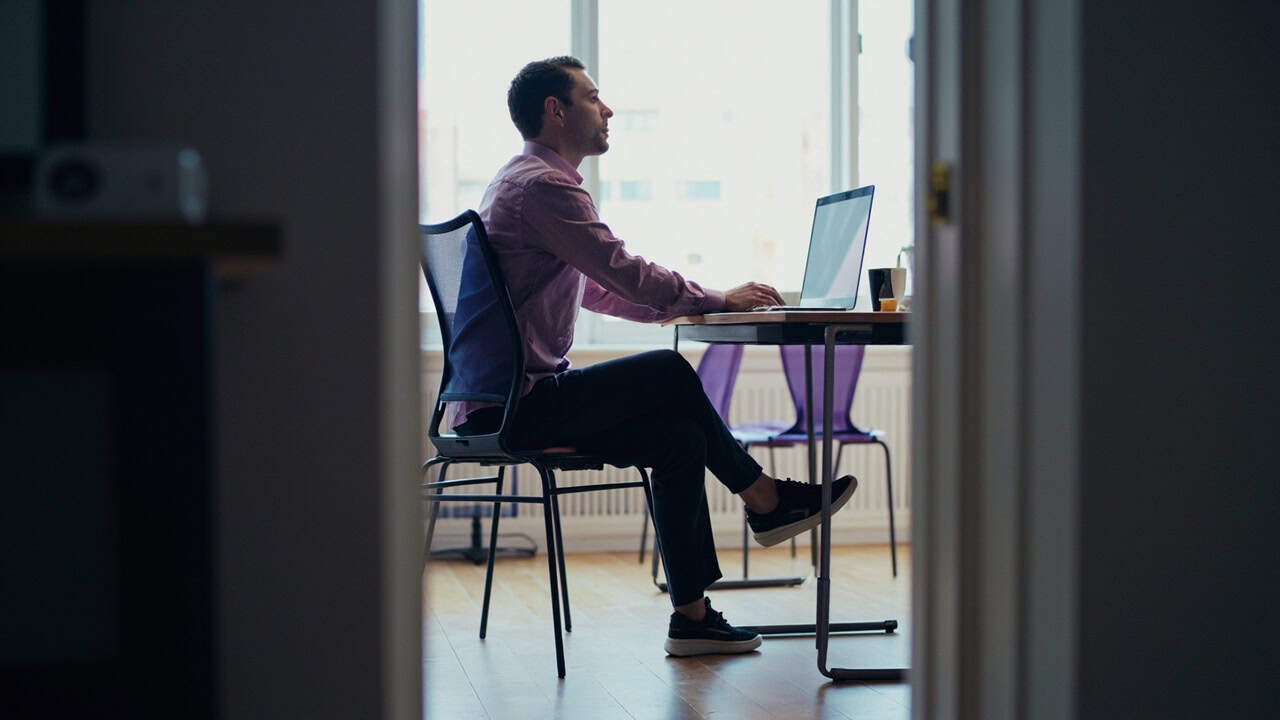
Proper seated posture begins with maintaining your spine’s natural curves, particularly the lumbar lordosis. Your lower back should have a gentle inward curve, not flatten against the chair back. This alignment distributes the load more evenly across the disc rather than concentrating stress on the posterior annulus, where most herniations occur.
Positioning your hips higher than your knees to create a more open hip angle may help reduce disc pressure.
Keep both feet flat on the floor or a footrest, avoiding crossed legs, which rotate your pelvis and create asymmetric disc loading.
Disc degeneration research indicates that sustained flexion postures accelerate biochemical changes in disc tissue. When you lean forward to view a screen or reach for objects, you increase intradiscal pressure while stretching the posterior annulus—exactly where your herniation likely exists. Instead, bring objects closer to you and position screens at eye level.
In my practice, I evaluate each patient’s specific disc pathology before recommending posture modifications. A central herniation responds differently to positioning than a posterolateral disc bulge. Generic posture advice ignores these anatomical variations, which is why some patients find certain “correct” positions still cause significant pain.
The goal isn’t perfect posture maintained rigidly for hours. Your spine needs movement variability—small position shifts every 20-30 minutes that allow nutrient exchange and pressure fluctuation within the disc. Static “optimal” posture maintained too long becomes problematic regardless of alignment quality.
For additional posture tips relating to cervical discs, see our guide on symptoms of a bulging disc in the neck C5-C6.
Ergonomic Adjustments That Actually Help
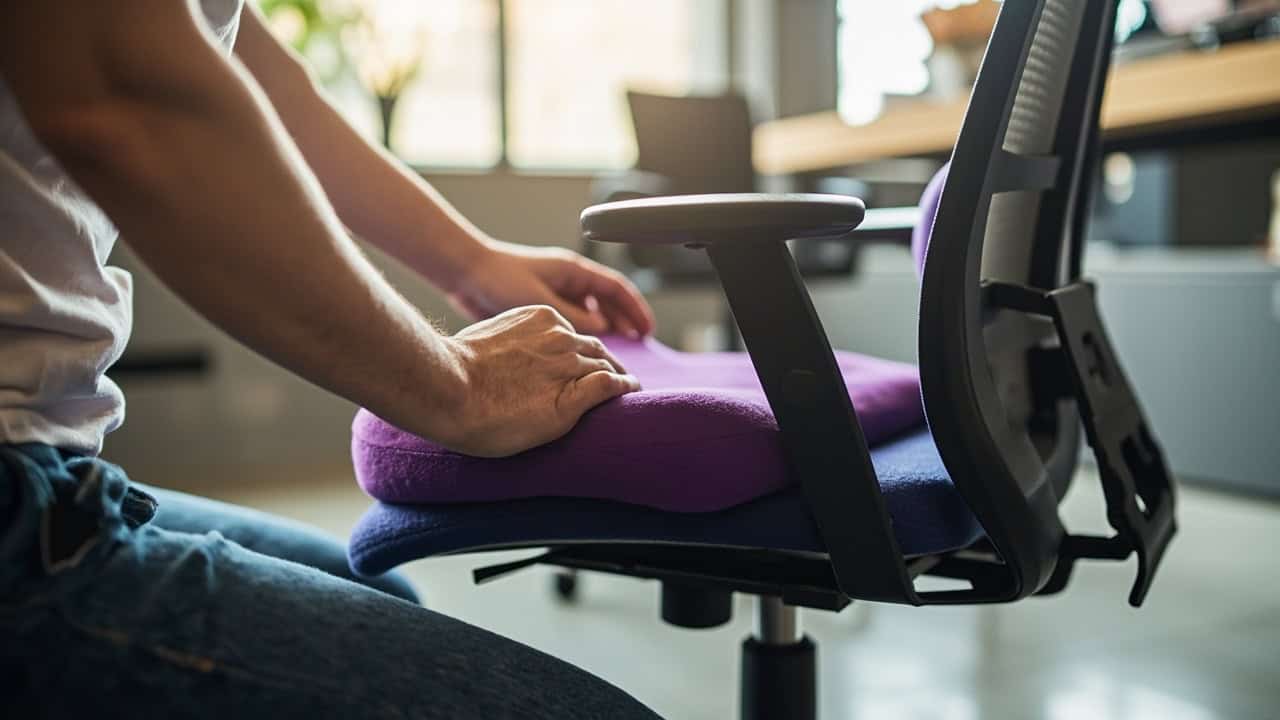
Lumbar support devices work by maintaining your lower back’s natural curve, preventing the posterior disc migration that occurs with slouching. Choose supports that fill the space between your lower back and chair without pushing you forward. The support should feel comfortable, not like you’re being forced into an unnatural arch.
Chair height matters more than most patients realize. When your feet don’t reach the floor, your pelvis tilts backward and your lumbar spine flexes. Adjust your chair so your thighs are parallel to the floor or slightly declining. If your chair doesn’t adjust low enough, use a footrest to achieve proper hip and knee positioning.
Interventional spine practice standards emphasize that ergonomic modifications should complement, not replace, appropriate medical evaluation. Standing desk intervals can reduce cumulative sitting time, but alternating positions matters more than standing duration. Incorporating 10-15 minutes of standing per hour may help reduce the adverse effects of prolonged sitting.
Seat cushions designed for herniated discs typically feature a coccyx cutout or wedge shape. The cutout reduces direct pressure on your tailbone and sacrum, while wedge cushions tilt your pelvis forward to maintain lumbar lordosis. However, these devices address positioning—they don’t repair damaged disc tissue or seal annular tears that continue leaking inflammatory material.
Position screens at or near eye level to promote proper posture and reduce strain.
This prevents the forward head posture that adds significant load to your cervical and upper thoracic discs, which can refer pain to your lower back through compensatory muscle tension.
Explore effective treatment options for L5-S1 disc herniation pain if you’re continuing to experience discomfort despite proper ergonomics.
When Sitting Comfort Doesn’t Mean Your Disc Is Healing
Finding a comfortable sitting position provides symptom relief, but comfort doesn’t indicate structural disc repair. The annulus fibrosus—the tough outer ring of your disc—doesn’t heal reliably once torn. Discogenic pain mechanisms research shows that annular tears allow nucleus pulposus material to leak, triggering inflammation that persists even when you’ve optimized your posture.
I evaluate many patients who’ve achieved sitting tolerance through ergonomic changes and physical therapy, yet their underlying disc pathology remains unchanged. Diagnostic imaging often reveals persistent annular defects and ongoing disc degeneration despite improved symptoms. This distinction matters because untreated structural damage can progress over time, potentially leading to more extensive interventions later.
Studies comparing surgical and non-surgical radiculopathy management demonstrate that conservative care can effectively manage symptoms in many patients. However, when annular tears continue leaking inflammatory mediators, conservative approaches may provide only temporary relief. The disc’s structural integrity—its ability to contain nucleus material and maintain proper biomechanics—requires more than posture modification.
In my Houston practice, I use diagnostic discography (annulography) to identify actively leaking discs in patients whose symptoms persist despite optimized conservative care. This testing reveals whether your disc is truly stable or continues to leak under normal physiologic pressures, including sitting.
For patients with confirmed annular tears and chronic discogenic pain, I may recommend the Discseel® Procedure—a minimally invasive approach that uses a biologic fibrin sealant to mechanically seal annular defects and support structural disc healing.
Learn from patients who have achieved lasting back pain relief with Discseel®.
Discseel® addresses what posture changes cannot: the actual annular tear that allows ongoing disc leakage. As one of only three certified master instructors worldwide and one of two physicians authorized to perform cervical Discseel®, I was personally trained by the procedure’s inventor, Dr. Kevin Pauza. This specialized training allows me to evaluate whether your disc pathology requires structural intervention beyond conservative care, helping you understand when sitting comfort alone may not be sufficient for long-term spine health.

One Patient’s Experience
I’ve treated thousands of patients at Performance Pain and Sports Medicine struggling with herniated disc pain, but Damian’s journey particularly illustrates what’s possible when conservative approaches reach their limits.
I had been in incapacitating pain and suffering from lumbar back pain for over a year due to herniated discs, Dr Wiederholz recommended the novel Discseel procedure and I can’t be happier with the results, 5 months after the procedure I’m feeling amazing and being able to return to my normal self and activities…
This is one patient’s experience; individual results may vary.
After a year of incapacitating lumbar pain, Damian had exhausted conservative options without lasting relief. His case demonstrates that when annular tears persist despite optimized posture and therapy, structural intervention may become necessary to address the underlying disc pathology rather than just managing symptoms.
For more on the causes and management of disc tears, read The Guide to Spinal Disc Tears: Causes, Symptoms, and Treatment Options.
Conclusion
Learning how to sit comfortably with a herniated disc requires understanding that symptom relief doesn’t always indicate structural healing. While optimized posture and ergonomic adjustments can significantly reduce your daily pain, interventional spine techniques continue evolving to address the underlying annular defects that conservative measures cannot repair.
In my practice, I’ve seen countless patients achieve sitting tolerance through posture modifications, yet their annular tears persist on diagnostic imaging.
When conservative strategies provide insufficient relief or when your functional limitations continue despite optimized sitting mechanics, physician-led evaluation becomes essential. I was personally trained by Dr. Kevin Pauza, the inventor of the Discseel® Procedure, and serve as one of only three certified master instructors worldwide.
For appropriately selected patients with chronic discogenic pain and confirmed annular tears, Discseel® offers a minimally invasive approach that uses a biologic fibrin sealant to mechanically seal disc defects and support structural healing—addressing what posture changes alone cannot fix. Evidence-based spine intervention guidelines emphasize that such procedures should be performed within credentialed, safety-focused frameworks by specially trained physicians.
If you’ve optimized your sitting posture but continue experiencing persistent pain or functional limitations, contact us to schedule a personalized evaluation.
For those seeking local care, view our Houston treatment location.
This article is for educational purposes only and should not be used as a substitute for professional medical advice, diagnosis, or treatment. Always seek the advice of your physician or other qualified healthcare provider with any questions you may have regarding a medical condition or treatment options. Never disregard professional medical advice or delay in seeking it because of something you have read in this article.
Frequently Asked Questions
Is sitting always bad for herniated discs?
No. Research shows that sitting with proper lumbar support can produce similar or even lower disc pressure than standing in certain positions. The key factors are your posture quality, sitting duration, and whether you incorporate regular position changes. Prolonged static sitting with poor posture increases load on already-damaged disc tissue, but brief sitting intervals with neutral spine alignment typically don’t worsen structural damage. The real concern is sustained flexion postures that concentrate stress on posterior annular tears.
Can posture alone heal a herniated disc?
Optimized posture reduces mechanical stress and can significantly improve symptoms, but it doesn’t repair annular tears or reverse disc degeneration. The annulus fibrosus doesn’t heal reliably once torn, meaning the structural defect persists even when you’ve found comfortable positions. Conservative posture strategies excel at symptom management and preventing additional irritation, but they don’t seal leaking discs or restore tissue integrity. Some patients require physician evaluation to determine if their disc pathology needs structural intervention beyond postural modification.
If you’d like to read more about treatments that may restore disc integrity, visit our resource on disc tear treatment.
When should I see a spine specialist about sitting pain?
Seek evaluation if your sitting pain persists despite six to eight weeks of optimized posture and conservative care, if you develop progressive leg symptoms or weakness, or if your functional limitations prevent you from working or performing daily activities. Persistent radicular symptoms, night pain that disrupts sleep, or pain that worsens despite proper ergonomics may indicate ongoing disc leakage requiring diagnostic assessment. A qualified interventional spine physician can determine whether your symptoms reflect mechanical irritation manageable with conservative care or structural pathology requiring targeted intervention.
Where can I find herniated disc treatment in Houston?
Dr. Matthias Wiederholz at Performance Pain and Sports Medicine offers comprehensive herniated disc evaluation and treatment in Houston. Dr. Wiederholz provides both conservative management strategies and advanced interventional options for patients whose disc pathology requires more than postural modification. The practice serves Houston and surrounding communities with evidence-based, individualized treatment plans.